The Coming Storm – the economic crisis resulting from the War on Iran

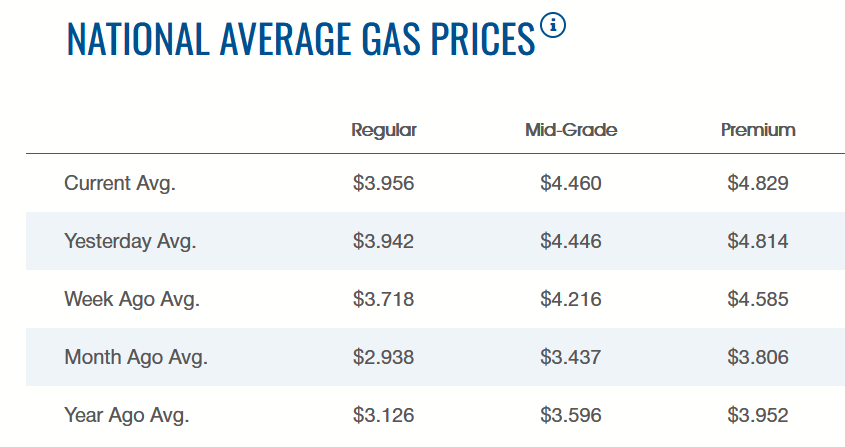
We can all see the tidal wave building just off shore. The U.S. and Israel waging war on Iran, and Iran’s predictable response to being viciously attacked are all beginning to have ripple effects far, far beyond any one region. The price of crude oil has already jumped as much as 60% since this senseless war began, and it will likely go much higher. United Airlines is anticipating oil hitting $175 a barrel, and its contingency plan involves cutting flights. For ordinary people pumping gas, the price is already up a dollar a gallon across the US:
Multiple experts and industries are now warning about the massive disruptions to come. For starters, the oil business is intertwined with numerous other industries. We could see shocks in the plastics markets and in nearly every form of shipping and transportation, which means prices are almost certainly about to jump, and we could even see shortages in some key goods. Across south Asia and southeast Asia countries with a much greater reliance on oil and natural gas from the Strait of Hormuz are already moving to reduce consumption.
Sri Lanka's government has introduced weekly fuel quotas, limiting drivers to 15 liters for cars and 5 liters for motorbikes. The Philippines and Vietnam have introduced a four-day workweek, and Thailand has told professionals to wear shirts instead of suits to save on air conditioning costs and to work from home, according to the Australian Broadcasting Corporation. And fuel shortages are spreading globally – Slovenia is limiting fuel purchases, Australian gas stations are running out of fuel, Egypt is making shops close early, and more.
Just as significant, there’s a real likelihood of a worldwide fertilizer shortage. At the least, we’re heading for major price shocks in this crucial industry. As Ilena Peng writes in Bloomberg: “Almost half of the world’s supply of sulfur — which is turned into sulfuric acid for the processing of phosphate fertilizer — comes from countries in the Middle East vulnerable to disruptions in the Strait of Hormuz.”
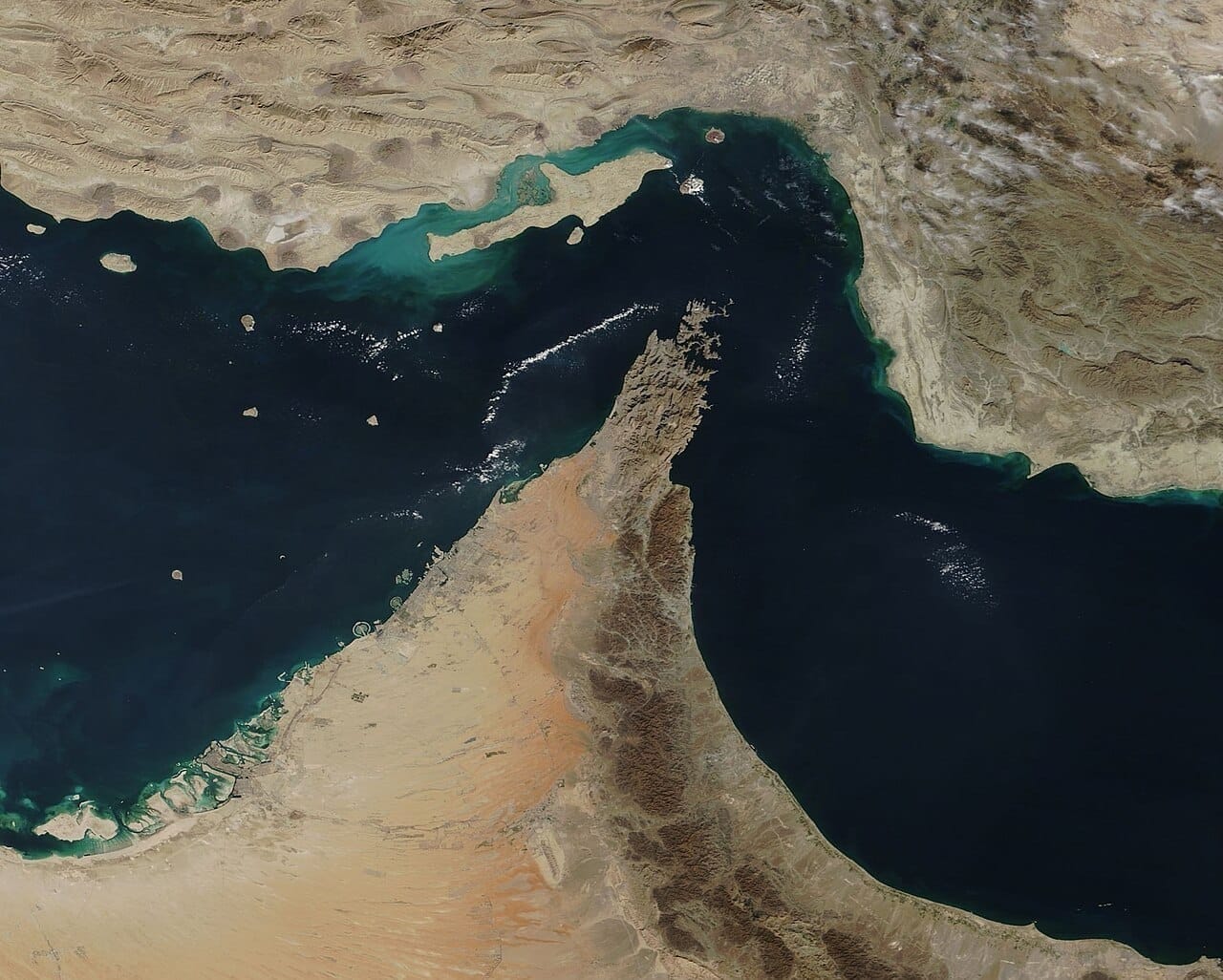
There is now a real risk to farmers across the U.S. and elsewhere that this growing season they’ll be dramatically short of fertilizer. And that risk grows every day that Israel and the U.S. refuse to deescalate. So this year we’re looking at staples like corn and soybeans being radically more expensive at best, and dramatically under-harvested at worst. These two products also have uses and effects far beyond just their direct consumption, such as the mass use of corn for animal feed.
The dual fertilizer and oil crises alone are enough to send the U.S. and the world into an economic crisis. Things could change rapidly – we continually see Trump send ‘Truth Social’ posts saying this thing is over, before he turns around and orders Marines to the Middle East. So who knows exactly what comes next, but serious disruptions to these markets have already occurred, and Iran is very well aware of the power they wield by being able to effectively keep the Strait of Hormuz closed.
And there’s one more thing. While ordinary people are already starting to feel the rising cost of oil, and while there’s no need to explain how working class people will feel the effect of food shortages or food prices rising, the ruling class is also deeply concerned about the flow and cost of helium. It’s a thing that initially sounds silly, one of the simplest substances in the universe is facing a shortage, but it’s as real as it gets for the international ruling class.
In writing about the helium shortage for AP, Kelvin Chan lays out how helium is a key component in chipmaking, and at this point we’re all painfully aware that AI chips are a pivotal item propping up much of the global economy. As Kelvin writes:
“Qatar supplies a third of the world’s helium… Helium is a byproduct of natural gas production, when it’s separated out by cryogenic distillation. Qatar, which sits on the world’s biggest single natural gas field, produces about 30% of global helium supply. state-owned energy company QatarGas halted production of LNG and “associated products” on March 2 because of Iran’s drone attacks and two days later declared force majeure, meaning it’s unable to supply contracted customers due to circumstances beyond its control.”
There is no viable replacement. The chip process requires helium, and hundreds of millions of dollars worth of liquid helium is sitting, stuck, another victim of the near-total closure of the Strait of Hormuz. And while this specific product might not directly impact your life, or mine, it is increasingly likely that its absence will contribute heavily to the looming global economic crisis, a rupture that could go down as one of the biggest unforced errors in living memory.
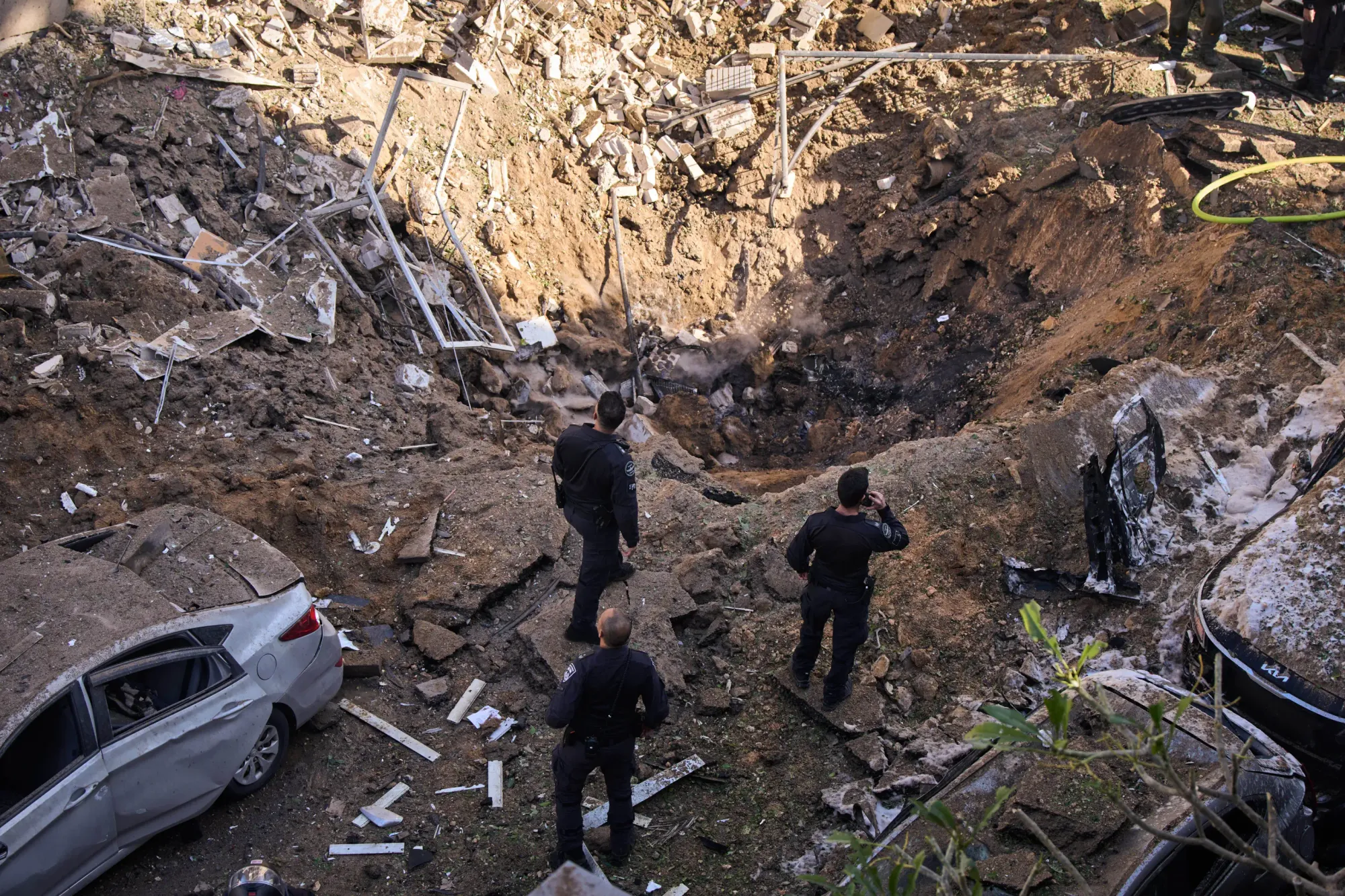
From the beginning of this catastrophe the Trump regime has failed to consider one key element of this situation: Iran. There appears to have been little to no thought about the internal political working of Iran, or the sophisticated military response that would be leveled at U.S. bases, allied assets, energy sites, and more. Who knows if Trump and Hegseth just thought they could end this in three days, or if they didn’t think at all. But now they find themselves largely at the mercy of Iran in multiple ways. As Chris Hayes recently pointed out, Dune author Frank Herbert was onto something when he wrote that whoever can destroy (or halt the flow of) a thing has the real control of it.
When Trump declared around 7:00 am Monday that his administration had been having productive talks with Iran, and moved his “we’re going to bomb your energy facilities” deadline by five days, markets immediately responded in a big way. Dow futures leapt a virtually unprecedented 1,200 points. Then, not long after, some Iranian outlets said there had in fact been no talks, and state TV even ran the banner: “US President Retreats After Iran’s Decisive Threats.”
It looks increasingly like Trump was primarily manipulating the stock market when he desperately hinted that peace was on the way. Not only are thousands of U.S. troops headed on multiple carriers toward Iran, but in the early hours of Tuesday morning Iranian energy-related building were bombed. As Al-Jazeera writes: “Huge explosions were reported overnight on Tuesday in the Iranian capital, Tehran, while attacks also targeted the cities of Tabriz, Isfahan and Karaj. Iranian media reported on Tuesday that Israeli-US strikes hit two gas facilities and a pipeline, hours after Trump postponed planned attacks on power infrastructure.” It’s unclear if the U.S. or Israel hit these facilities, but Iran appears to have responded by aiming for electricity related targets in Kuwait and Saudi Arabia.
Trump is not in control here, which is something we have to reckon with. Iran is in an immensely powerful position, and might be inclined to wreak havoc on the world trade of multiple crucial goods in order to do everything in their power to ensure that they are not viciously bombed again and again in the coming years. The U.S. has already removed sanctions on Iranian oil that’s out at sea, without Iran even asking for that concession. And now they likely see the ability to extract many more concessions from this hapless Trump regime.
In all likelihood no real offramp is coming before prices in multiple key sectors skyrocket further – despite Trump’s attempt to sooth the market with lies. Our day-to-day lives are likely to get far more expensive, and there may be shortages in certain agricultural products in the coming months as well. There could be more long-term effects to global trade, to the AI industry, and ultimately to international finance. One expert, Laleh Khalili, even says that Iran’s move to permit tankers to sell oil in yuan, but not dollars, could even spell the end of U.S. hegemony.
Talking to Democracy Now!, Khalili explained that, “The fundamental basis of the U.S. imperial order since the end of the Second World War has been, on the one hand, petroleum and, on the other hand, the U.S. dollar.” And now Iran is deliberately undermining that dominance in response to this war conducted by the U.S. and Israel. If this continues the basis of American power will be severely weakened, and the decay of the U.S. empire is likely to accelerate rapidly.
So the erosion of U.S. economic and geopolitical power, rising prices, and shortages of goods. The months and possibly years ahead look immensely difficult for the working class around the world, and folks in Western countries may suddenly be hit by the need to change their standards of living in unexpected ways. We see how shortages are hitting the third world first, and are likely to hit hardest as their nations have less economic power to provide a buffer from the fallout. But unless the situation changes rapidly, and unless Iran decides not to exercise their power here to maximum effect, people everywhere will feel the dramatic economic tsunami building as a result of this war.
The natural question here is, of course, what can we do? Countries around the world are responding primarily by attempting to reduce energy consumption. By and large this will limit the wages of ordinary people and the profits of small shopkeepers, and won’t empower the working class because of the way this rationing is typically conducted. But, multiple countries are already rushing to import solar tech and other fossil fuel alternatives, a move that could not only help shift the trajectory of climate change, but could also disempower the massive fossil fuel companies that have such a stranglehold over the global economy.
There are numerous other solutions to this looming crisis that could help address the immense financial strain working class people are about to face across the globe. In Spain, left-leaning Prime Minister Pedro Sanchez has announced a decree introducing a temporary freeze on rents nationwide in response to this war. The measure still needs parliamentary approval, but it’s likely to be passed along with temporary tax cuts on fuel and electricity.

In the U.S. we know that such measures are unlikely. Even when the world shut down for the beginning of Covid, a national rent freeze was never on the table here. We did get eviction moratoriums, people did get checks, and folks collected enhanced unemployment for a while, but corporate profits also soared as little was done to stop companies from raising prices again and again – using ‘supply chain disruptions’ as a prolonged excuse to extract more money from desperate customers.
And it’s happening again. As Isabella Weber and Gregor Semieniuk write, “The world energy shock is coming. The US and Israel’s illegal attack on Iran will provoke a global economic catastrophe… most of today’s global economy is run by giant corporations that set their own prices, and our research shows that cost shocks helped them coordinate price hikes.” We’re starting to see this happen already, with some gas companies are already reaping windfall profits as they use the disruption of the war against Iran to raise prices. BP and Shell are already projected to make $5 billion from this crisis. And barring a miracle countless other corporations are about to hit us with the insidious mixture of real cost raising and needless price-gouging. So we need answers that allow us to address this plague of corporate greed.
The other day I happened to read about one radical answer to this exact kind of problem. Well, many would call it radical, but I’d also say it looks increasingly reasonable and necessary these days. Andreas Petrossiants wrote a fascinating piece in Lux Magazine about the autoriduzione movement in Italy in the 1970s. As the piece reads: “Autoreduction, or self-reduction, was when factory workers, housewives, squatters, and others ‘reduced’ the price of public services, commodities, and housing by force — blocking buses and standing up to landlords and electric, telephone, and gas utilities.”
The 1970s saw price shocks, and specifically an oil crisis that reverberated around the world. One example in Andreas’ article comes when Turin bus companies decide they need to hike fairs. He writes, “In response, factory workers spontaneously and immediately blocked bus routes and then collaborated with transit unions to issue their own tickets at the old fare.” There is a simple beauty to this. People, collectively organized, have the power to decide not to pay more, have the power to decide that corporations don’t need more profit and that the essential goods of life should remain accessible.
Yet I was struck by, among other things, the astoundingly non-radical nature of this solution. Sure in our capitalist world it is coded as radical when people decide an essential service shouldn’t have its price jacked up. But ultimately it’s painfully reasonable. Painful in that it takes immense collective action for people to enforce the notion that electricity, for example, should remain affordable – even in times of crisis. And at the same time this is such a small, simple demand. A demand we should all be able to get behind, and should all work towards as we face a totally needless economic crisis in the months ahead.
At the same time as we organize the capacity to conduct moves like “auto-reduction” of prices, we should also think even bigger. During the Great Depression people often demanded, and enforced, more than just corporations not raising prices. They gathered together to halt evictions, they went on rent strikes, they organized for jobs programs where the government employed millions. This is the horizon we need to work towards, and we must go still further. Windfall corporate profits during difficult times should not be possible. A system where the pain and strain of billions makes a few people rich should not be possible. Moments of crisis force us to think about this underlying structure of society, but this truth holds outside of these pivotal moments as well.
In the coming months, and maybe years, we’re going to be compelled to look at the deformed, lopsided economic system we live under. This system is likely about to face immense strain due to its dependence on fossil fuels, its penchant for war, and the way capitalism has enabled and led to the fascism we see today. There are solutions, but most of them are labeled radical. And yet in moments of rupture and crisis the radical is more able to break through as millions become open to answers they may have dismissed just the other day. So we need to press forward. The coming crisis, and our future more broadly, demand a willingness to pursue radical change and engage in the work of bringing about a new, radical vision. And, more so every day, it becomes clear that the time to enact that vision is right now.
Thank you for reading! Please share this newsletter around (www.jphilll.com) if you're able to do so. Every reader and every share helps keep this going, thank you! And if you're able to subscribe today I'd be immensely grateful - JP


.jpg)