I'm not good at Posting anymore

You might know that I’m fairly good at Twitter. And, to be clear, while this may have once been a brag, it's now more of an admission. Despite my chagrin, the data still seems to indicate that I’m “good” at writing tweets. This data consists of the likes and shares and various numbers that are taken to indicate the success of a tweet, or post, or video on the internet. And I'm able to generate those numbers, able to generate them sufficiently to get paid by an organization to write and send tweets for them for 40 hours a week somehow. But the other day I was sitting there, scrolling Twitter at work, and I realized that the magic was gone.
At this point you might say “obviously, the magic left Twitter a long time ago,” and you’d be right. But this is bigger than one website being destroyed by the richest man on Earth because he’s a sniveling Nazi – it’s about posting writ large. It’s about the shortcomings of our era’s predominant form of communication, the social media post.
When I wrote about leaving Substack a month ago I kept thinking about how a newsletter platform had been turned, and is being turned, into yet another social media site. Instead of writing, it’s coercing people into posting.
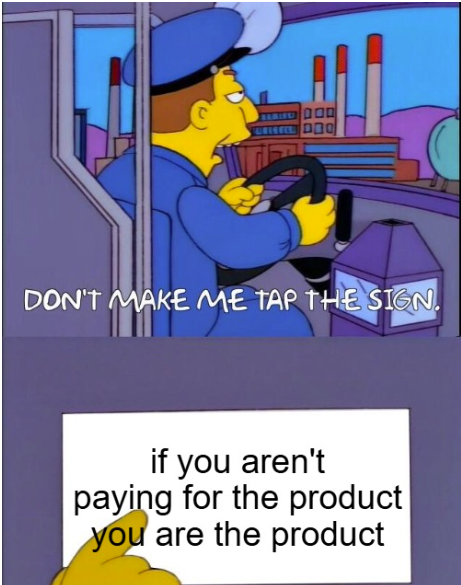
The question naturally becomes, what is posting? It’s a near ubiquitous phrase online, but what does it actually mean? Mechanically it means clicking post on some thought or photo or video and sending it out onto a social media site. But when you juxtapose it with writing, it comes to encapsulate something much larger, and, I would argue, more insidious.
Posts are not meant to be chewed on. They’re not meant to be digested and sat with and pondered. One of the great uniters of social media is that posts are scanned, scrolled over, clicked on for the briefest of moments, then discarded. They have to jump out, stand out, grab your attention. If they win your focus, if they win even a moment of your time, they’ve done their job. There doesn’t need to be much below the surface, anything beyond that initial fleeting grab is bonus. If there is real substance there, that’s great, you’ll spend a minute with it before moving on with your scrolling, and your day.
In thinking about the melding of social media and writing, in thinking about how we’re incentivized to post rather than write, I keep coming back to short-form thinking versus long-form thinking. I’m good at short-form thinking, and I would argue that I always have been. My mind is decisive, my thoughts tend to be structured and concise. Twitter comes easily – the quips, the retorts, the condensation of a complex idea into 280 characters works for me. And for years I was enamored with the numbers this skill produced. Viral tweets, follower count, numbers went up and sometimes cool things came from that.
But, ultimately, nothing changed. It grew stale. One unimportant viral post after another. Specifically, one viral post about our deteriorating societal and political conditions after another. Imploring people to organize, to think differently, to fight. Numbers would go up and nothing would come of it. (I should interrupt myself briefly here to say that collectively I think we do make some impact in this way, millions of micro-interactions do shift opinion and discourse over time.) But ultimately I found that I was performing for the numbers, engaging in short-form little thoughts and tweets just to go viral, and was feeling empty at the end of it all.
Equally important, I was missing out on long-form thought. Starting a newsletter a few years ago initially seemed to remedy that yawning gap. Less energy into quips and more time spent thinking through ideas in depth. More substance, more quality, moving a little slower in order to engage in the long-form thinking that only writing can really enable.
But even that was temporary. I’ve written enough about enshittification already, so I won’t bore you with a rant, but suffice it to say tech platforms ruin themselves in the pursuit of endless profit. Substack gradually came to encourage and prioritize and incentivize short-form thought. I wanted to write quips in each newsletter because those were more likely to be shared and quoted on the social media app side. This newsletter grew, for me, closer and closer to another form of posting. Sure each post was slightly longer, and may have included some decent ideas, but for me they grew to be more like a series of short-form thoughts strung together, not the in-depth thinking I want to do and think we need.
Just the other day I was reading an insightful newsletter from Emon Green that broke down some of the same ideas I’m getting at here. The piece wrestles with the idea of referring to the ruling class as the “Epstein class” – something we’ve now seen from multiple Democrats, in addition to plenty of folks online. It’s a powerful phrase, evoking anger at billionaires and other conspirators in Epstein’s circle. But Emon argues that it actually obscures the real class structure of society. The term “ruling class” causes us to think about power relations, capitalism, class dynamics, they argue, while “Epstein class” might lead people to think that this one cabal who went to this one island is running everything. One is a reduction, while the other is an accurate simplification of a complex truth, the piece says.
Emon pulls a needed quote from Kwame Ture, which reads: “[To] make people think in America is an extremely difficult job. The difficulty arises from the fact that… the capitalist system seeks to make the people think they’re thinking when, in fact, they are not thinking. And it is extremely difficult to convince someone who thinks they’re thinking that they are not thinking. It is, but it is our responsibility.” And I keep thinking about this in the context of posting and social media. We’re buffeted with smart slogans, clever quips, tweets that contain significant truths, and they all don’t just make us think we’re thinking, they make us think we’re clever. Wittiness prevails in many ways over wisdom or deep understanding. I know I’ve fallen into this exact dynamic. It’s easy to mistake the packaging for the product – it’s easy to mistake clever wording for knowledge and understanding.
But slogans don’t indicate a real depth of knowledge. Slogans that are getting at the truth can also block us from deeper understanding when we repeat one simple phrase instead of continuing to dig below the surface. The progressive movement has a tendency to “rely on sloganeering” to agitate masses of people, and in fairness it’s sometimes effective. We should indeed Abolish ICE, for example, and that position is more popular than it’s ever been. But are we just channeling the growing anger at this one element of the system, this one Gestapo force, or are we also understanding how the ruling class scapegoats migrants in order to more effectively exploit them? Are we helping people understand that the capitalist class doesn’t want to end immigration, what they actually want is a vulnerable population that has a limited ability to fight back against sub-minimum wages and terrible conditions and political disenfranchisement? Are we moving toward an understanding about borders and policing, and toward toward action to topple both of these structures?
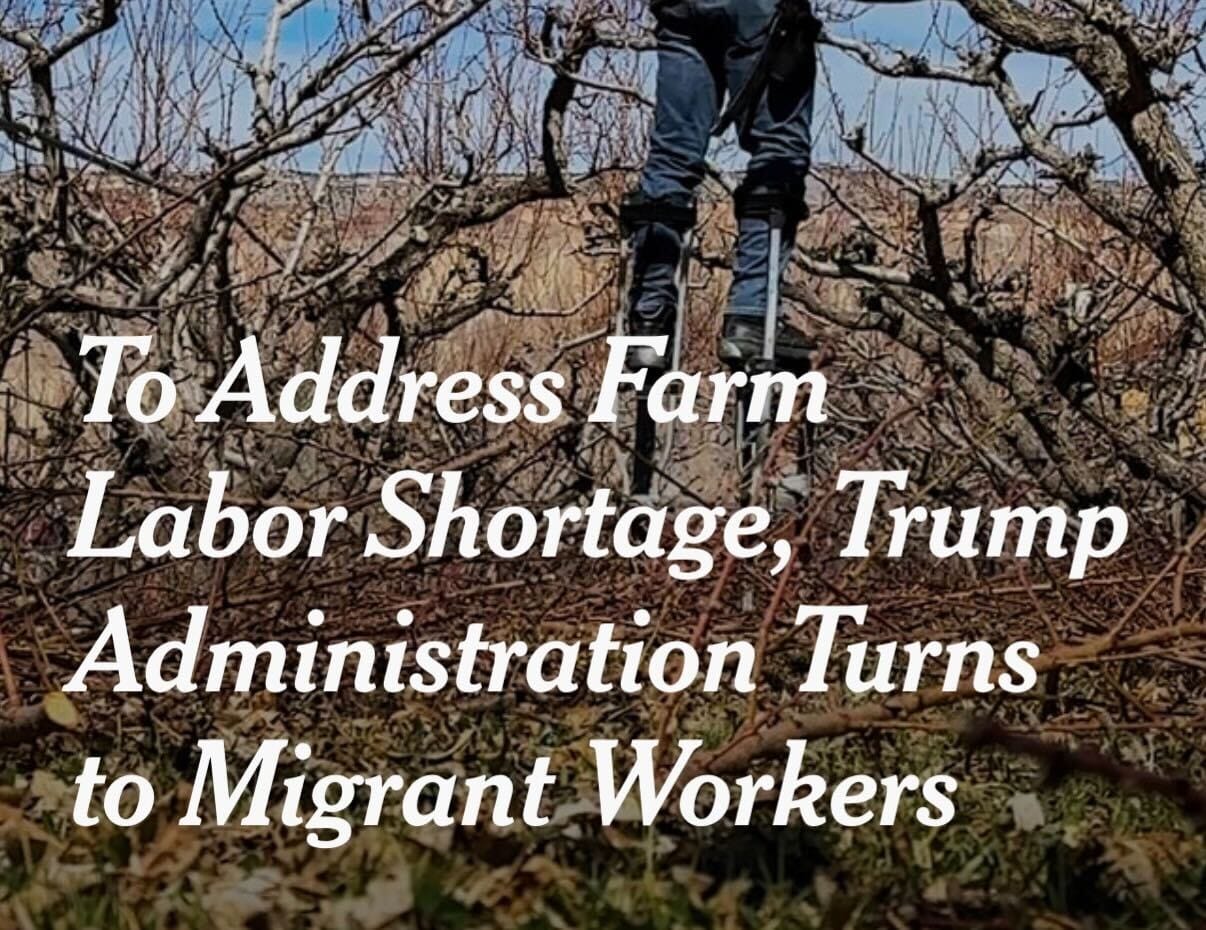
All is this is still just the beginning, of course. Right now the beautiful and righteous fight against ICE is just the tip of the iceberg, so to speak. We’ve been lied to about immigration and borders and safety and so much more. And it’s crucial to abolish ICE, but it’s also vital to understand the systems at play. My work, in this newsletter, is partially to spark that sort of thinking. In this new phase of my writing I’m determined to move away from sloganeering, to move away from an overreliance on these pre-packaged phrases that may ignite awareness and emotion in you, the reader, but don’t necessarily ignite deeper understanding. I'm determined to bring you long-form, rather than short-form, thought.
I know this doesn’t apply to everyone, I know a reliance on slogans doesn’t apply to many of the wonderful writers I read and have read, and I know it might not apply to you. This is the personal accounting of a guy who spends more time on social media than he’d like to, and for whom that won’t change as long as I have my current job. But I know this newsletter doesn’t have to fall victim to short-form thinking. I know that I have more to offer than pre-loaded sayings, quotable lines that might activate something in you, but which don’t advance either your thinking or mine. The purpose of this newsletter has always been to be truly helpful in the struggle toward a better world – and to do that I’m quite sure I need to slow down and offer you something new and thorough, rather than something regurgitated that skims across the surface of an idea.
So here we are. I want to do something different here. I want to slow down and do more long-form thinking for you, and for myself. My brain, like so many others, is in need of some rewiring and repair. I’m not going to get this 100% right at first, as much as I want to, but I am going to try week in and week out. I hope it mostly looks the same on your end, I hope this transition is smooth for you. I’m already excited for the next post, which is an article I’ve been working on while this newsletter was in a period of transition. Thank you for sticking with me, your support in this relaunch means a lot. Every one of you who subscribes allows me to write and think with you, to slow down and zoom out and produce thoughts worth sharing, thoughts that hopefully help us all move toward a better horizon. So thank you. - J.P.